
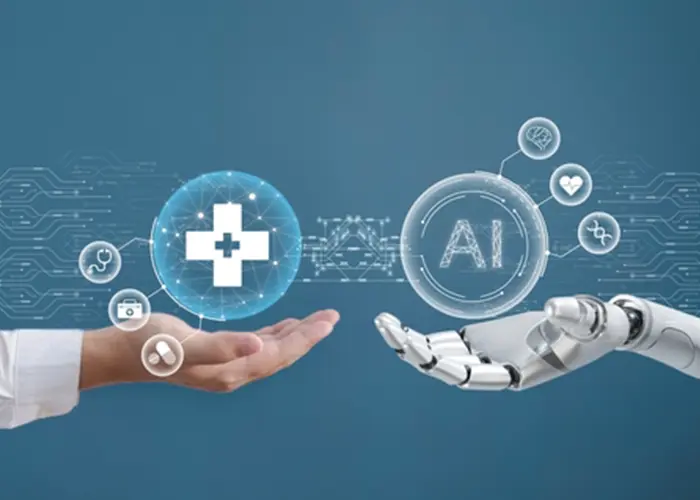
Aexa Aerospace and SpacePort Australia have formed a joint venture, dubbed ‘The Hamilton Project’, to train and refine a deductive medical artificial intelligence model intended to support medical care for spacecraft and space station crews.
In a statement, SpacePort Australia described the partnership as focused on completing training and refinement of an AI model designed to assist in treating crew in environments with limited resources, including on exploration missions and in future off-world settlements.
SpacePort Australia’s Dr Gabrielle Caswell said the work is intended to support medical needs for recreational space travellers and space tourists, alongside long-duration exploration-class missions.
Aexa Aerospace founder and CEO Dr Fernando De La Peña Llaca said the company has developed holographic medical devices that enable remote examination of patients and that the technology has been trialled on the International Space Station. The release said the collaboration would expand the technology by combining Aexa Aerospace’s AI and holographic systems with SpacePort Australia’s medical and clinical experience.
The organisations also pointed to parallels between space medicine and healthcare delivery in remote Australian communities, arguing that rural and remote medical training programs and clinical experience could help inform medical preparation for space missions. Caswell said Australian rural general practitioners often work across a broad range of clinical areas, including obstetrics and gynaecology, paediatrics, trauma management, anaesthetics, general surgery, mental health and geriatrics.
The project is named after NASA flight surgeon Dr Douglas Hamilton, who the release said has supported 50 missions and continues to practise as an internist in Calgary, Alberta, Canada. The release described Hamilton as having certified on all NASA launch consoles “available at time”.
SpacePort Australia said project managers Dr Mina Arsanious and Dr Mark Bienoki have been recruited to help manage international clinical contributions and to become familiar with the project. Caswell said remote space medicine may require knowledge of pharmaceuticals, botanicals and alternatives to Western medicine, given the uncertainty of health conditions that may arise in radically different space environments.
The release also said SpacePort Australia has conducted mathematical modelling related to the human microbiome and the effects of space travel, including potential impacts of nutrition on physiology, fitness and psychological wellbeing.
De La Peña Llaca said the Hamilton Project is intended to integrate academic and clinical knowledge into an AI model for future autonomous medical support.