A major optics upgrade to a key space surveillance asset in Western Australia has been completed, preserving a critical capability as orbital congestion and security concerns intensify.
L3Harris Technologies, working with Australian partners, has refurbished the primary mirror of the U.S. Space Force’s Space Surveillance Telescope (SST), restoring and enhancing its ability to detect and track objects in geostationary Earth orbit (GEO).
The milestone was highlighted by Mission Delta 2 commander Colonel Barry Croker at the 2025 Advanced Maui Optical and Space Surveillance Technologies Conference, noting the successful completion of the telescope’s first primary mirror recoat and the resulting improvement in detecting smaller targets in GEO.
Located in the Southern Hemisphere, the SST provides wide-area surveillance of objects approximately 36,000 kilometres above Earth. The system is used to track satellites, debris and potential threats, contributing to broader space domain awareness efforts by the United States and its allies.
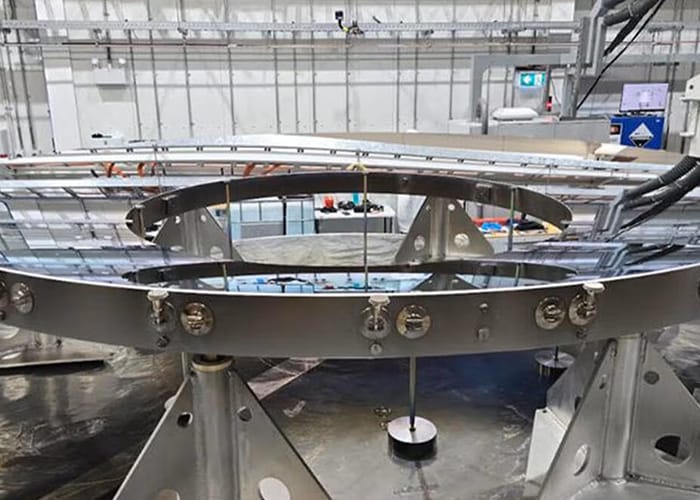
The refurbishment involved removing, restoring and upgrading both the primary and tertiary mirrors. Engineers carried out structural repairs to improve stability, while the primary mirror underwent stripping, cleaning and recoating using a dedicated vacuum deposition system. The tertiary mirror received specialised cleaning and hardware repairs to meet updated performance standards.
The upgrade extends the operational life of the telescope and enhances its optical performance, supporting more accurate tracking and detection in a domain where smaller objects and emerging threats are becoming increasingly significant.
Originally based at White Sands Missile Range in New Mexico, the SST was relocated to Australia in 2017 and became operational in 2022 as part of a joint U.S.–Australia space situational awareness partnership.
Unlike space-based sensors, which cannot be serviced once deployed, ground-based systems such as SST can be maintained and upgraded, providing a sustained capability advantage as space becomes more contested.
The telescope forms part of a broader network of sensors supporting military, civil and commercial space operations, where maintaining visibility of the geostationary environment is critical for collision avoidance, asset protection and monitoring of adversary activity.