

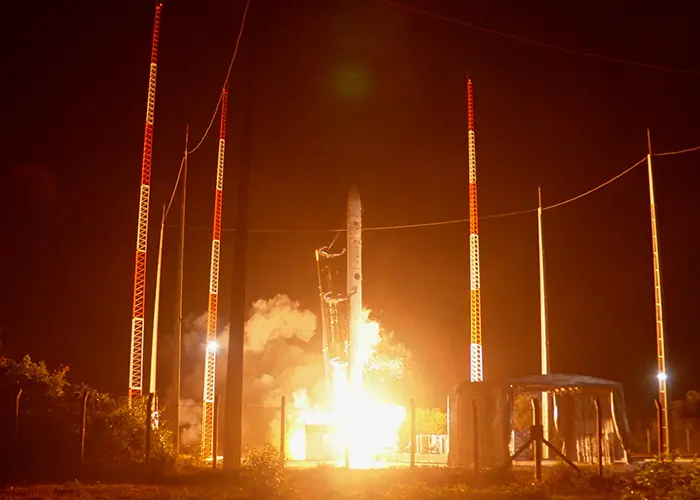
South Korean launch services company INNOSPACE says it has identified the cause of the in-flight termination of its first commercial HANBIT-Nano mission following a joint investigation with Brazil’s Aeronautical Accidents Investigation and Prevention Center (CENIPA).
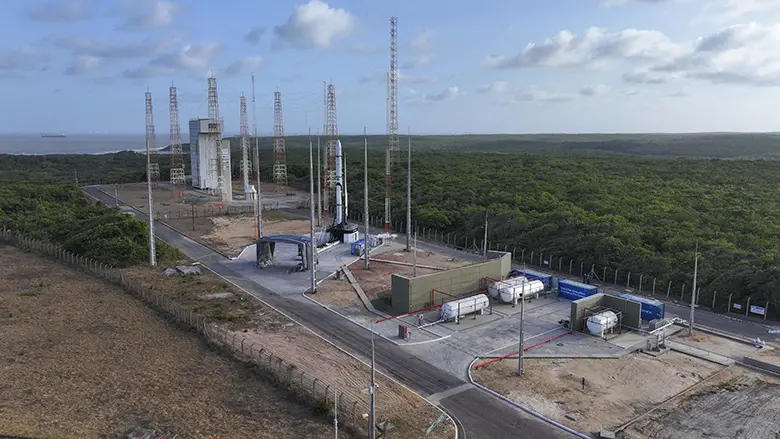
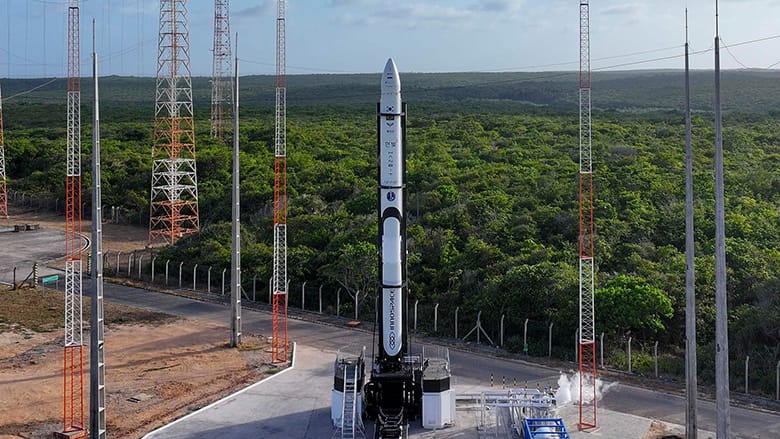
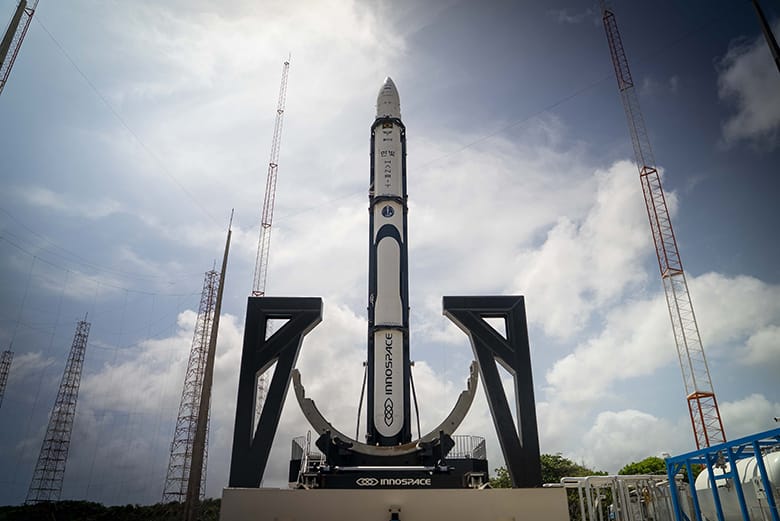
The investigation examined the SPACEWARD mission, launched on December 22, 2025 (Brazil local time) from the Alcântara Space Center. INNOSPACE said investigators reconstructed the flight sequence using telemetry and tracking data, ground facility data, launch operation records and video footage. The company also said more than 300 pieces of recovered debris were analysed.
According to INNOSPACE, the vehicle initially flew normally and transmitted flight data after liftoff. The company said that 33 seconds into flight, combustion gas leakage occurred at the forward section of the first-stage hybrid rocket combustion chamber assembly, leading to a rupture of the combustion chamber and the vehicle separating into multiple parts.
INNOSPACE said the joint investigation determined the leakage was caused by insufficient compression and uneven sealing performance. It attributed this to plastic deformation of sealing components during reassembly after a forward chamber plug replacement during launch preparation activities in Brazil.
The company said it plans to strengthen assembly processes and quality management procedures, implement design improvements and upgrades to related components, and add functional verification procedures.
INNOSPACE CEO Soojong Kim said the investigation produced a consistent conclusion between INNOSPACE and CENIPA and that there were no differences on follow-up measures.
INNOSPACE said that at the outset of the investigation CENIPA advised INNOSPACE and South Korea’s space regulator, KASA, that the inquiry was intended to improve operational safety rather than determine legal liability. INNOSPACE also said CENIPA indicated intellectual property related to the launch vehicle would be protected during the process and that the investigation would follow technical and independent principles aimed at preventing recurrence.
Colonel Alexander Coelho Simão, identified by INNOSPACE as CENIPA’s investigator-in-charge for the occurrence under the Brazilian Air Force, said cooperation and transparency were maintained among INNOSPACE, CENIPA and KASA, and that joint analysis led to a technically consistent conclusion.
INNOSPACE said CENIPA is expected to release its official position on the findings in due course.
INNOSPACE said the timing of a follow-up launch will be finalised after corrective measures are completed and launch authorisation is received from KASA. The company said it plans to conduct a follow-up launch in Brazil in the third quarter of 2026 using an already secured launch slot.
CENIPA is the Brazilian Air Force authority responsible for aerospace accident investigation. INNOSPACE said the Brazilian State classified the HANBIT-Nano launch as an “incident” rather than an “accident”.
INNOSPACE said the SPACEWARD mission was terminated in flight in accordance with safety procedures after an anomaly was detected 33 seconds after launch, and that there were no injuries or additional damage to facilities.