Australian space firm HEO and researchers from UNSW Canberra Space are set to undertake what is being described as the nation’s first Rendezvous and Proximity Operations (RPO) mission using an active propulsion system, marking a step forward in sovereign on-orbit capability.
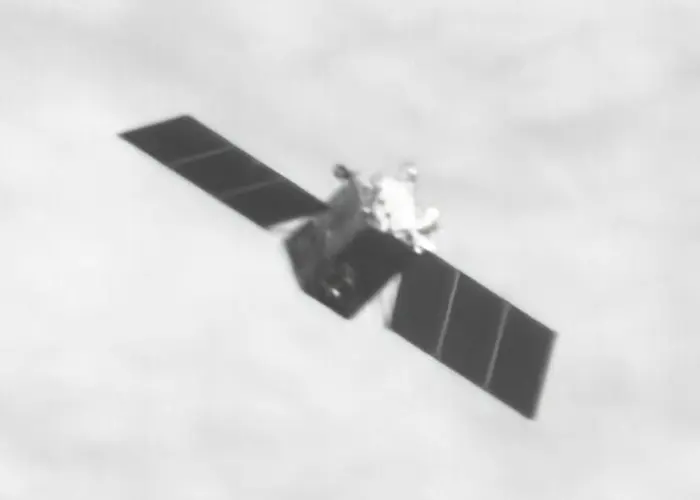
The project, supported by Defence Trailblazer’s Advanced Innovation Fund, will use HEO’s recently acquired satellite Continuum-1 as the operational platform to develop, test and validate proximity manoeuvres in orbit. The mission is designed to establish three core capabilities domestically: active RPO, enhanced satellite monitoring, and the generation of real-world data to calibrate ground-based sensor networks.
Rendezvous and Proximity Operations refer to the ability of one spacecraft to approach and manoeuvre near another object in orbit. The capability underpins satellite servicing, inspection and debris management, but is also central to Space Domain Awareness (SDA) — the monitoring and interpretation of behaviour in increasingly congested and contested orbital environments.
While UNSW Canberra Space previously demonstrated formation flying without active propulsion between 2021 and 2023, this mission will extend that work into fuel-efficient, propulsion-based manoeuvres under operationally realistic conditions. According to the partners, the objective is to better understand how to execute complex approaches while conserving fuel and optimising imaging geometry and lighting conditions for close-range satellite inspection.
The data collected will be used to validate algorithms and refine Australia’s sensor networks, providing what the team describes as “ground truth” data. In practical terms, this could improve analysts’ ability to infer spacecraft intent and distinguish routine manoeuvres from potentially hostile activity — a growing priority as dual-use space technologies proliferate.
HEO, a UNSW spin-out company specialising in non-Earth imaging and high-frequency orbital insights, acquired Continuum-1 in recent weeks with the stated aim of establishing a sovereign testbed for research and development. The satellite will now serve as the platform for executing the RPO sequences.
UNSW Canberra Space brings more than a decade of small satellite design and operational experience, having built and flown five satellites across four missions since 2015. The university group also operates a university-led SDA sensor network and is developing an experimental SDA Operations Centre.
The initiative aligns with broader Australian defence priorities around resilient space capability and closer integration of commercial and academic innovation. As RPO technologies carry both civilian and defence applications, the development of sovereign expertise is increasingly seen as strategically important.
The mission’s outcomes could extend beyond the demonstration itself. By producing validated, real-world manoeuvre data rather than relying solely on simulations, the project may support future SDA training, algorithm development and operational planning.
While no timeline for the in-orbit manoeuvres has been publicly detailed, the collaboration signals a maturing domestic capability in complex space operations — an area historically dominated by major spacefaring nations.
As Australia expands its role in space security and surveillance, the ability to conduct and interpret proximity operations will likely become a foundational component of its broader space strategy.