
Brisbane-based Hypersonix Launch Systems confirmed the first flight of its DART AE vehicle at speeds above Mach 5.
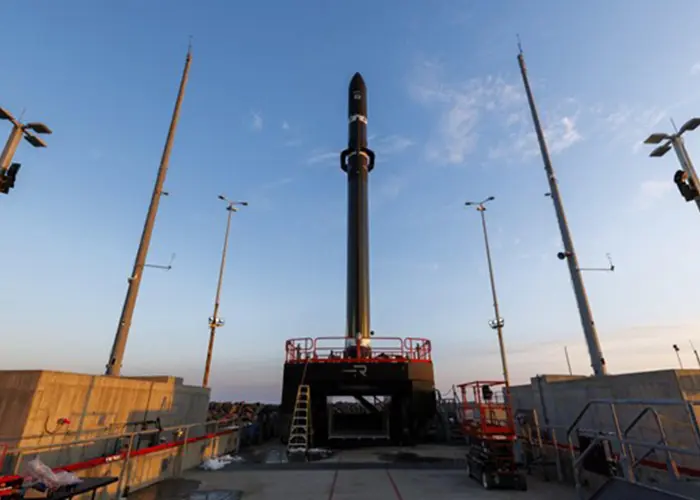
The flight took place from NASA’s Wallops Island facility in Virginia on 27 February (US Eastern time), with the DART AE launched aboard Rocket Lab’s Hypersonic Accelerator Suborbital Test Electron (HASTE) vehicle. Conducted under the United States Department of Defense’s Defense Innovation Unit (DIU), the mission marks the first time the company has tested its autonomous aircraft in what it describes as “true hypersonic conditions”.
Hypersonic flight refers to speeds exceeding Mach 5 — more than five times the speed of sound. At these velocities, aircraft encounter extreme aerodynamic heating, structural stress and control challenges, making sustained, controlled flight technically complex and expensive to validate.
Hypersonix says the 3.5-metre DART AE vehicle was carried to a designated deployment point in the upper atmosphere before executing its test profile. The company stated the aircraft gathered propulsion, materials and guidance data during the flight, which will now undergo detailed analysis.
Co-founder Dr Michael Smart, a former NASA research scientist and former Chair of Hypersonic Propulsion at the University of Queensland, described the flight as a critical validation step.
“At these speeds and temperatures, there is no substitute for flight data,” he said in a statement, noting the results would influence future vehicle designs.
While the company has not publicly released detailed performance metrics — including peak altitude, duration of hypersonic flight, or recovery outcomes — the test positions Hypersonix among a small number of private-sector firms globally attempting to demonstrate operationally relevant hypersonic capability.
The involvement of the US Defense Innovation Unit highlights the growing strategic interest in hypersonic systems among Western defence agencies. Hypersonic technologies are being pursued for a range of applications, including high-speed strike, intelligence and reconnaissance, and rapid-response capabilities. The sector has attracted significant geopolitical attention as major powers race to develop and counter such systems.
Hypersonix is developing what it describes as a new class of autonomous hypersonic aircraft capable of sustained flight up to Mach 12. Its next platform, VISR (Velos Intelligence, Surveillance and Reconnaissance), is intended to build on DART AE’s test program. However, operational timelines and specific use cases have not been detailed publicly.
The milestone comes shortly after the company closed a $46 million Series A funding round. Backers include Australia’s National Reconstruction Fund Corporation and Queensland Investment Corporation, alongside UK-based High Tor Capital, European defence company Saab, and Polish investor RKKVC. The mix of government-backed and defence-aligned investors reflects the dual-use and strategic nature of hypersonic development.
Hypersonix currently employs more than 50 staff in Brisbane across engineering, manufacturing and test roles. The company says the funding will expand advanced manufacturing capability in Queensland and accelerate its flight test program.
For Australia, the successful flight — if validated through further data release — would represent one of the country’s most advanced privately led aerospace demonstrations to date. However, the path from a single hypersonic test flight to a deployable, sustained operational platform remains technically demanding and capital intensive.
As global investment in hypersonics intensifies, scrutiny will likely focus not just on speed claims, but on repeatability, endurance, guidance precision and integration into broader defence systems. The data from Wallops Island may prove pivotal in determining whether Hypersonix can move from experimental validation to scalable capability.