An Australian-designed plant experiment is scheduled to launch to the International Space Station on 12 February (US time), marking a rare example of locally led agricultural research reaching low Earth orbit.
Developed by researchers at the University of Southern Queensland, the experiment will fly two small plant growth chambers to the ISS to examine how plants respond to microgravity. The project aims to test whether machine vision and artificial intelligence can detect early signs of plant stress in space before they are visible to human observers.
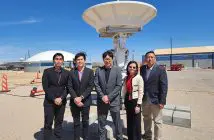
The experiment is led by UniSQ Associate Professor Cheryl McCarthy, whose team is currently in the United States completing final pre-launch preparations. Once on orbit, the payload will continuously image plant growth, generating daily data sets that will be analysed to compare healthy growth conditions against deliberately induced stress.
According to McCarthy, the dual-chamber design is intended to capture subtle differences in plant development that may not be apparent through visual inspection alone. The approach reflects growing interest in automated monitoring systems for environments where direct human oversight is limited.
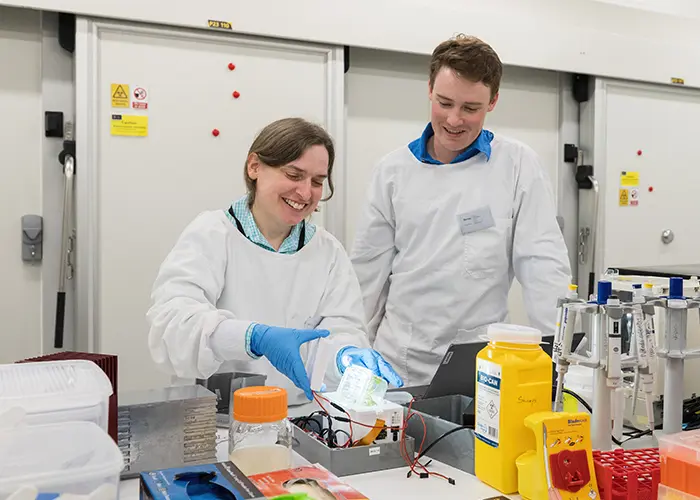
Before receiving clearance to fly, the experiment underwent months of ground testing and safety reviews to meet the strict certification requirements for ISS payloads. The team conducted repeated full-system rehearsals using flight-ready hardware to validate performance and reliability.
At the launch site, the final steps include sterilising the plant chambers, loading seeds and growth media, sealing the payload and transferring it for integration ahead of liftoff.
Research into plant growth in microgravity is considered an enabling capability for future long-duration space missions, particularly where resupply from Earth is limited. Plants are viewed not only as a potential food source, but also as contributors to life-support systems and future in-space manufacturing processes.
The underlying monitoring technology being tested has potential terrestrial applications, particularly in remote, automated or controlled-environment agriculture, where early detection of plant stress can improve yields and reduce labour requirements.
The project is funded through the iLAuNCH Trailblazer program and involves a mix of Australian and international partners supporting launch services, payload integration and hardware development.
If successful, the mission would demonstrate Australia’s growing ability to design and deliver complex scientific payloads for the ISS, while generating data relevant to both space exploration and Earth-based agriculture.