
Australia is set to fly its first zero-gravity scientific research team on a large crewed parabolic flight in October, following an agreement between the French Space Agency CNES and The University of Western Australia (UWA).
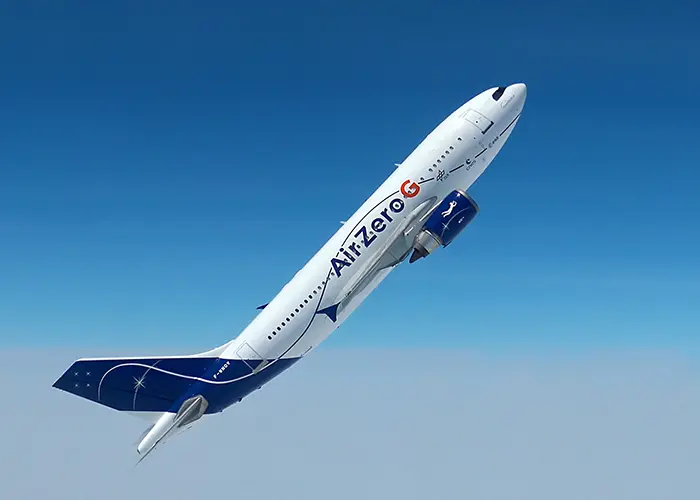
The partnership will see Australian experiments conducted aboard Novespace’s Airbus A310 Zero-G, described by UWA as the world’s largest civilian microgravity research platform.
The team, drawn from UWA’s International Space Centre, plans to fly an experiment aimed at improving the extraction of fuel and fertiliser from off-Earth resources, a capability that could support longer-duration human space exploration.
The campaign comprises three zero-gravity flights with a total of 93 parabolic manoeuvres, each providing up to 30 seconds of weightlessness, giving researchers repeated opportunities to observe and adjust their experiment in microgravity conditions.
UWA noted the aircraft has previously been used by Australian astronaut Katherine Bennell-Pegg for zero-gravity training as part of her astronaut preparation with the European Space Agency.
International Space Centre Director Professor Danail Obreschkow said the campaign marked a defining moment for Australian space science.
“This endeavour marks a defining moment for Australian space science,” Professor Obreschkow said.
“Our zero-gravity experiments will enhance Australia’s research standing in chemical catalysis. And strategically, this mission will pave the way for sustained access to large, crewed microgravity flights for Australian researchers, with enormous benefits to research, industry and STEM inspiration.”
UWA said Professor Obreschkow has previously served as a mission specialist across 354 parabolic flight manoeuvres aboard the Airbus Zero-G with the European Space Agency.
Scientific lead Professor Hongqi Sun said the team is investigating how reduced gravity affects a sunlight-driven process to convert methane and carbon dioxide into syngas, which can be used to produce fuels and other chemicals.
“We are using sunlight to turn two simple gases—methane and carbon dioxide—into so-called syngas, a versatile mixture that can be used to make fuels and essential chemicals,” Professor Sun said.
“By flying our experiment in weightlessness, we aim to understand how gravity affects this process. This could enable future astronauts to produce fuel and materials from local resources on missions to places like Mars, and help optimise chemical manufacturing on Earth.”
UWA described the work as an early-stage experiment intended to assess how key processes respond across variable gravity levels, with the aim of generating data that could inform systems to produce propellant and agricultural inputs using materials available in space.
Alongside the research flight, the International Space Centre is offering two places on the campaign to Australian undergraduate students, including one spot open through a national competition for undergraduates at any Australian university.
Details on how to apply for the undergraduate competition are available at: https://unihub.uwa.edu.au/students/jobs/1029278