

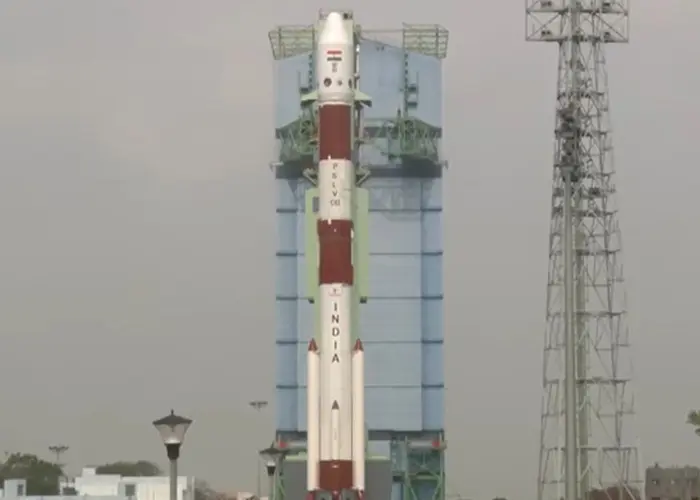
The Indian Space Research Organisation (ISRO) has confirmed that its first orbital launch of 2026, the PSLV-C62 mission, did not achieve its intended orbit after an in-flight anomaly, resulting in the loss of all onboard payloads.
The Polar Satellite Launch Vehicle lifted off from the Satish Dhawan Space Centre at Sriharikota on 12 January 2026 at around 10:17 a.m. IST. The mission was intended to deploy the EOS-N1 Earth observation satellite along with multiple co-passenger payloads. According to ISRO, the vehicle performed normally during the initial phases of flight before experiencing an anomaly during the third stage, which caused a deviation from the planned trajectory.
ISRO officials acknowledged the issue shortly after the launch and stated that the mission could not be completed as planned. The space agency has confirmed that the payloads did not reach orbit and that a detailed analysis of flight data is underway to determine the cause of the failure. No further technical details have been released at this stage.
The PSLV has long been regarded as a reliable workhorse of India’s space programme, supporting a wide range of scientific, commercial and exploration missions over several decades. As a result, the failure has drawn attention within the international space community, particularly as it follows earlier anomalies involving the launch vehicle’s upper stages.
ISRO has indicated that findings from the investigation will be shared once the analysis is complete. The agency has not yet commented on the potential impact of the anomaly on future launch schedules, pending the outcome of the review.