

Australia’s vision for next-generation space agriculture has taken a major step forward, with the iLAuNCH Trailblazer confirming its innovative greenhouse payload has received full approval for flight to the International Space Station (ISS).
The experiment is scheduled to launch aboard NASA’s Crew-12 mission in February 2026 and return to Earth on SpaceX’s SpX-34 mission in June 2026. The mission will advance global efforts to monitor plant health in space using low-cost, intelligent imaging systems.
The team has now completed a series of critical milestones bringing the research closer to orbit. The payload consists of two compact greenhouses, each measuring 200 mm x 100 mm x 100 mm, designed as closed terrariums containing agar and essential nutrients. During the mission, the greenhouses will be used to grow lettuce, selected as an ideal test species for studying early indicators of plant health in microgravity.
At the core of the experiment is a goal to demonstrate machine-vision algorithms capable of detecting plant stress at an early stage using low-cost cameras engineered to withstand the harsh conditions of space. The technology is intended to support future long-duration space missions, while also delivering immediate benefits for Earth-based controlled-environment agriculture.
The research team is now in the final phase of pre-flight testing, validating plant growth performance and refining imaging protocols ahead of the February launch window.
The mission is the result of a close collaboration between the University of Southern Queensland (UniSQ), Axiom Space and Yuri Gravity. Last month, the partners completed a successful test campaign in Germany, rehearsing payload integration procedures that mirror those to be carried out at NASA’s Kennedy Space Center. The team practised preparing the greenhouse modules, conducting final checks, and formally handing over the experiment for spacecraft loading and transfer to the ISS.
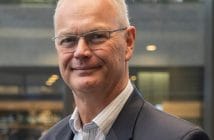
“This milestone brings us one step closer to demonstrating how intelligent imaging can support plant health in space and on Earth,” Project Lead Associate Professor Cheryl McCarthy (pictured) said. “Our team has worked incredibly hard to design a compact, resilient payload capable of generating high-quality data in orbit. We’re thrilled to see the project progressing towards launch and to showcase Australian innovation on an international stage.”
With launch preparations now underway and final science tests nearing completion, the greenhouse experiment is set to become a prominent example of Australia’s growing capability in space-based agriculture and sensing technology.