

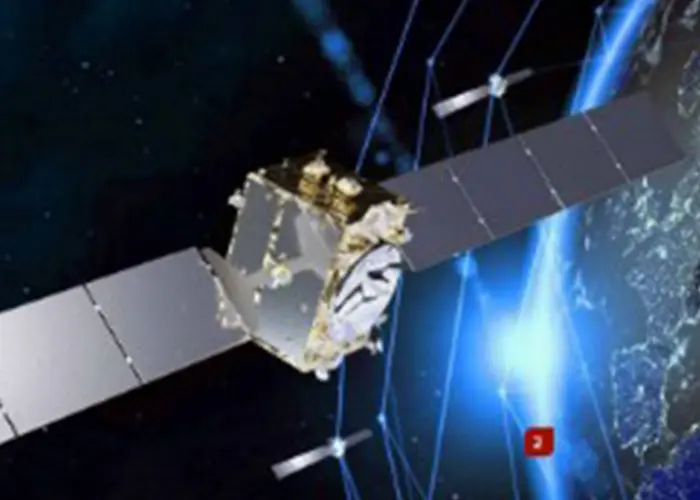
Europe is set to strengthen its space-based navigation capabilities with the launch of two new Galileo satellites on December 17 (December 18 AEDT), marking the 14th mission in the programme and an important step in maintaining the European Union’s strategic autonomy in space.
The Galileo L14 mission will launch aboard an Ariane 6 rocket, adding two satellites to the constellation that provides positioning, navigation and time synchronisation services used by more than four billion devices worldwide. The launch comes as several first-generation Galileo satellites approach the end of their operational lifespans, making replacement critical to maintaining service availability and performance.
Spain-based technology company GMV plays a central role in the mission, leading development of Galileo’s ground control segment. The control segment operates continuously, monitoring satellite health and position, managing orbital manoeuvres, safeguarding signal integrity and supporting the deployment of new satellites after launch. GMV’s systems enable 24-hour operation of the constellation from control centres in Germany and Italy.
The L14 mission is one of the final launches planned for Galileo’s first-generation satellites. Future launches will transition to second-generation spacecraft, designed to deliver higher precision, improved resilience against signal interference and stronger protection against cyber threats. GMV has been responsible for developing control systems for both generations and is also leading work on a test bench to validate second-generation satellite upgrades and new services.
The launch is also a milestone for Europe’s new Ariane 6 launcher, supporting independent European access to space following the retirement of Ariane 5. Together, Galileo and Ariane 6 are seen as key elements of Europe’s long-term space sovereignty.
Galileo underpins a wide range of civilian and industrial applications, including urban navigation, advanced driver-assistance systems, precision agriculture, electrical grid and telecommunications synchronisation, emergency response services and logistics operations, as well as emerging autonomous and drone technologies.
As geopolitical tensions and competition in space increase, Galileo is viewed as a critical infrastructure asset that allows Europe to maintain essential services independently of other global navigation satellite systems. The L14 launch reinforces that capability, ensuring continuity of service while preparing the constellation for its next technological phase.