
NASA has moved one proposed Small Explorer (SMEX) mission into its next development phase while extending concept studies for a second, as the agency continues to refine its future heliophysics portfolio.
The Science Mission Directorate’s management council has selected the CINEMA mission — Cross-scale Investigation of Earth’s Magnetotail and Aurora — to enter Phase B, a stage focused on detailed planning and preliminary design for flight and operations. Led by principal investigator Robyn Millan of Dartmouth College, CINEMA aims to investigate how plasma energy circulates through Earth’s magnetosphere and why that flow can be unpredictably steady at times and explosive at others.
Understanding this dynamic behaviour is key to improving forecasts of space weather events, which can trigger auroral displays but also disrupt satellites, power grids and communications.
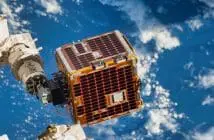
CINEMA proposes a constellation of nine small satellites in polar low Earth orbit, each carrying an energetic particle detector, auroral imager and magnetometer. By linking measurements of particles and magnetic fields with real-time auroral imaging, the mission intends to capture the complex chain of processes connecting Earth’s magnetic environment to visible effects in the ionosphere.
NASA has awarded approximately US$28 million for CINEMA to progress into Phase B, with the full mission cost capped at US$182.8 million excluding launch. Phase B will run for 10 months. If the mission proceeds to full development, launch would occur no earlier than 2030.
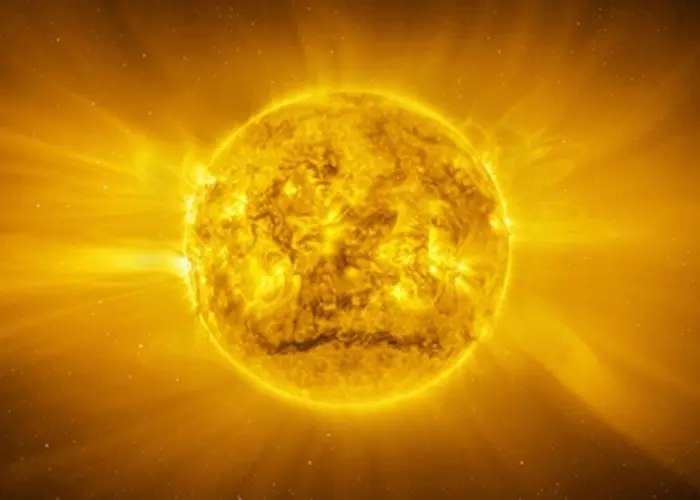
A second mission concept — the Chromospheric Magnetism Explorer (CMEx) — will remain in Phase A for an additional year. CMEx would study the Sun’s chromosphere using ultraviolet spectropolarimetry adapted from NASA’s CLASP sounding rocket experiment. Its goal is to investigate the magnetic origins of solar eruptions and the solar wind. Led by Holly Gilbert of the National Center for Atmospheric Research, CMEx has been allocated US$2 million for the extended concept refinement.
Both concepts emerged from the 2022 SMEX Announcement of Opportunity, which solicited new heliophysics missions in NASA’s Explorer Program.
NASA officials say the studies are central to long-term efforts to better understand and predict solar events that can threaten spacecraft and crewed missions.
“Space weather affects nearly every aspect of modern life,” said Asal Naseri, acting associate flight director for heliophysics. “These mission concepts, if advanced to flight, will help protect satellites we depend on and enhance safety for astronauts operating near Earth, at the Moon, or on the road to Mars.”