
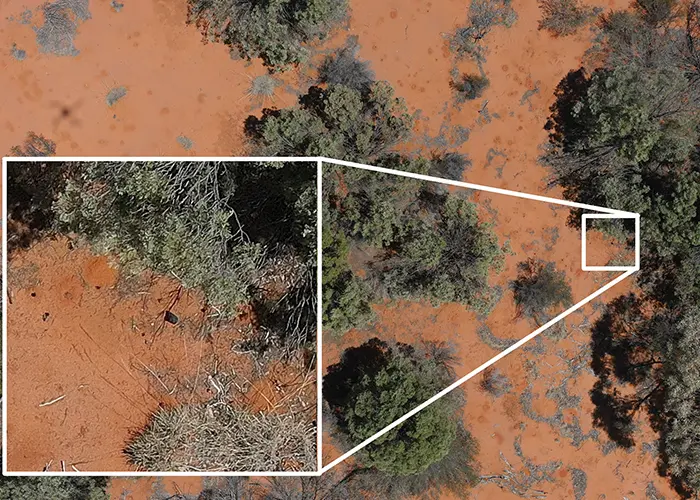
Three Curtin University PhD students from the Desert Fireball Network (DFN) have successfully located a meteorite that streaked across the night sky months earlier, using a new AI-powered drone search tool to pinpoint its final landing site in remote Western Australia.
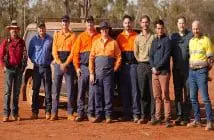
Michael Frazer, Dale Giancono and Iona Clemente spent eight days driving, camping and hiking through bushland several hundred kilometres east of Kalgoorlie before they located the space rock. The meteorite entered Earth’s atmosphere on the evening of July 11, producing a fireball captured by the DFN’s observation network and prompting a detailed search of the predicted fall zone.
Frazer said the team’s next steps will involve analysing the meteorite to understand its origins. “Now that the meteorite is back at Curtin, we’ll put it under the microscope to determine its composition and age,” he said. “By using the observations of the fireball, we were able to determine the orbit of the rock before it hit the Earth and we know exactly where in the solar system it came from. Being able to combine its place in the solar system with its composition and age is super exciting.”
The Desert Fireball Network uses a network of automated cameras across Australia to track fireballs and triangulate potential fall locations. The introduction of AI-assisted drone surveys is helping researchers narrow search areas more rapidly, improving the chances of recovering meteorites before they degrade in harsh environmental conditions.
The discovery adds to Australia’s growing record of scientifically significant meteorite recoveries, offering fresh insights into the early solar system and the origins of rocky bodies that reach Earth.